
Having students present in front of the class is classic teen comedy fodder. We see those awkward scenes in every cliched TV show and movie, right down to my personal favorite, Mean Girls (“Brutus is just as cute as Caesar! Brutus is just as smart a Caesar! When did it become okay to be the boss of everybody because that is just not what Rome is about!) and I often find myself wondering what the actual project being presented in that scene was supposed to look like. What I will say is that presentations in my class often have all that passion, but very little else in common with Gretchen Wiener’s Brutus diatribe. Bottom line: how can you organize student presentations to go quickly, smoothly, and as low stress as possible for your students? It’s going to be different for everyone, but I want to share my five tips based on what works in my classroom! A few of these take NO planning to implement, and those honestly are the most impactful (see #3 and #4).
- Present often on a lot of casual topics. Having students come to expect that they will present anything they spent more than a day or two on is the first hurdle. Any piece of writing or work that benefitted from a full planning, revision, and proofing process is going to be presented in my classroom. A few pieces that didn’t even get that process might be as well. Having students in the routine of presenting things they’ve invested time in is important. So make the time to have them present it all!
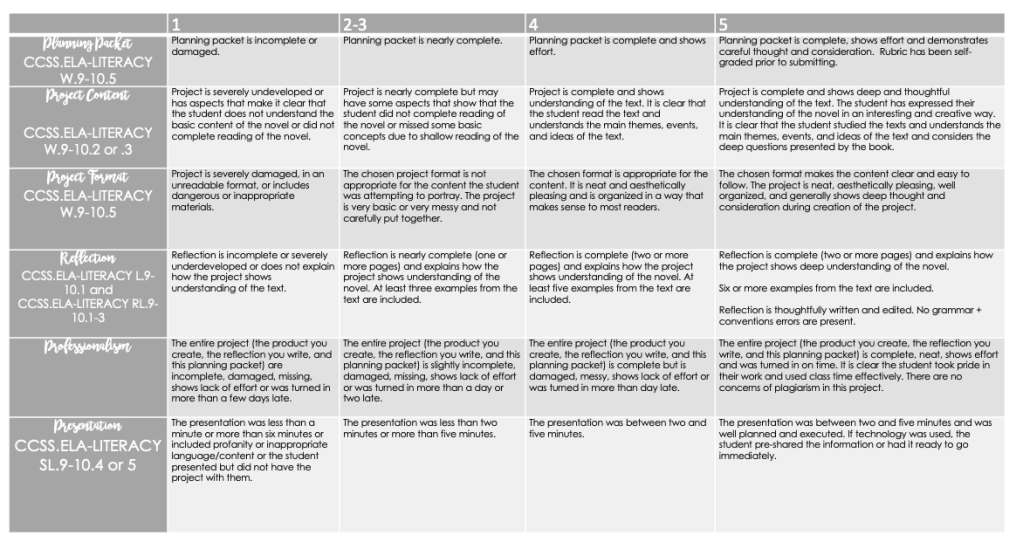
2. Front load expectations. In every project, I include a full, standards-aligned rubric. The last two sections are almost always the same. I include a professionalism grade and a presentation grade. The professionalism portion is the only part not tied to a specific standard. I’ll list an “exemplary” grade as “the project was taken seriously, turned in on time and complete, and is in good condition with no wrinkles or tears. The student use class time effectively and did not distracts other from their own success. There are no concerns of plagiarism throughout this process.” This section really covers a LOT of classroom management and grading policies in one small grade. I’ll explain more about how I set up my grade book in a later post. The presentation grade section is tied specifically to:
“CCSS.ELA-LITERACY.SL.11-12.4
Present information, findings, and supporting evidence, conveying a clear and distinct perspective, such that listeners can follow the line of reasoning, alternative or opposing perspectives are addressed, and the organization, development, substance, and style are appropriate to purpose, audience, and a range of formal and informal tasks.”
If am requiring that they do a digitally based presentation, I may substitute or add another line to the rubric with the other standard:
CCSS.ELA-LITERACY.SL.11-12.5
Make strategic use of digital media (e.g., textual, graphical, audio, visual, and interactive elements) in presentations to enhance understanding of findings, reasoning, and evidence and to add interest.”
It’s important that if you’re giving students the choice between a digital project and a paper one you do not grade this part separately. Only include this section if you’ll be able to grade all your students on this criterion. I try to have 1-2 projects a year that are digital-only so we can focus more on this standard.
Once I have the standards plugged in, I describe what my expectations look like for a 1, 2-3, 4, and a 5 as you can see on the rubric above. At the start of the year, my presentation rubric expectations stay very simple– usually just a time frame and general professionalism. When assigning the project, I go over the rubric and take extra time to ask them to look at the presentation requirements. I remind them that that’s all I can grade them for and I won’t make up any extra “secret” expectations. Throughout the year, I might add more specific requirements to the 4 and 5 grade sections, sometimes listing specific content I want them to share or points about body language and volume. The bottom line is to keep it simple the first few times as students get into the routine.
3. Have students sign up to present. The day before each presentation day, I remind students that if they are picky about the order they present in, they should be on time to class to get first pick of spots. Then on presentation day, when the students enter the room, I have about 20-25 spots for a 28-student class written out on the board. It will say something like “presenting today– third hour” and have 20 numbered spots below it. I will also have a smaller section that says “presenting after school today” that has 3-5 spots on it.
When they enter class, I have a reminder on the daily agenda to sign up for a spot. Then students can grab the expo marker and choose a spot on the list. This is great because the kids who want to go first to get it over with can do that, and the ones who want to see a few other presents first can put themself further down the line. I usually have a few empty spots, but we just skip those with no issue.
The other benefit is that if you run out of time because the individual presentations are taking longer than you thought, you have a clear list of who still needs to finish up during the next class period and you won’t forget to make time for that. There have also been days (that I am not proud to admit) that I am grading a project and genuinely can’t remember if a student presented. I always snap a photo of the list after presentations are done so that I have a clear record of who presented on which day, in case my teacher brain forgets when I finally sit down to grade the whole project and enter grades in the grade book two days later.
4. Use presentation buddies! This sounds cheesy, but if my high school seniors don’t roll their eyes, this will work for any age group. When presentation day comes, I put the list on the board, and just in front of it I place two chairs with about four feet of space between them. When it’s time to start presenting, I have everyone clear EVERYTHING from their desks except whatever they need to present (including the project planning guide and rubric, which they hand to me when they head up to present.
We start by having the first three people on the sign-up list go to the front of the room. The first person stands in the space in the middle and the second and third people take seats in the chairs on either side. When the first person is done presenting, they head back to their seat and the second person moves into their spot. The fourth presenter on the list gets up from their desk, hands me their rubric, and takes the chair the second speaker just vacated. When the second speaker is done, the third speaker moves into the presentation spot and the fifth person on the list gives me their rubric and takes the now empty chair at the front. This continues throughout the class period until we get to the last three presenters. When that happens, after the third to last presenter speaks, they just switch spots with the second to last presenter and then that person switches with the final presenter.
I don’t know what the psychology is here, but something about having two other students right next to you when you’re presenting helps my students immensely and I have generally really high presentation rates without having to give a pep talk every few minutes. This also selfishly has some benefits, because the whole process goes very quickly. I can easily get through 20 three-minute presentations within a block period with lots of time to spare since kids already know what order they are going in and they know that others are waiting for them to get to the front of the room. Before trying this strategy, I just took volunteers to present next, and the time it took for someone to raise their hand, offer to go, bring me the rubric, walk to the front of the room, compose themselves, and then start talking took FOREVER!
5. If all else fails, let students present after school. Some students just aren’t ready to present in front of the whole class, and that’s okay. Take baby steps by allowing them to come in after school and present to a smaller group of friends. If a student wants to utilize this accommodation, my only requirement is that they bring two peers to present to. It can’t be a parent, another teacher, an adult aide, or an admin. It has to be two other students, though I don’t require that they are in my class. I pick one specific day they can come in (usually the day before we present in class, but sometimes the day of, especially for afternoon classes– If you let them come in two or three days later, they will always choose that option because it buys them extra time to finish the project) and put it on them to show up on time with friends to present to. These two small hurdles are just cumbersome enough that the kids who don’t really need the accommodation will just present during class time, and those who really need it aren’t overly burdened with extra work. Obviously, you’ll have to make some arrangements if students ride the bus, but I try not to provide lunch time simply because it makes it a little too convenient for my students and I do tend to have 5-10 random students in my room at lunch, which makes the crowd overwhelming for the presenter.
Question: Do you make all your students present?
No! If a student wants to take a zero for that section of the rubric once or twice a year, I am okay with that. I only require that they demonstrate mastery of that standard once per semester minimum. If a student is absent on presentation day, they can take the zero, or bring two friends in after school when they return. If it was an excused absence I will occasionally make extra time during class for them to present so they don’t have to go find two friends after school. If it was unexcused, I’m okay to let those natural consequences apply 🙂
Question: How do you make students pay attention during other’s presentations?
Two things:
1) I make them clear their desks completely. I’ll often have them leave binders in their lockers on presentation day, or stack them on a side table. I allow them to get out their project, essay, or whatever they are presenting and the rubric, but I encourage them to put it under their chair so that they don’t accidentally start making tweaks or edits while waiting their turn to present.
2) I let them know that I am paying attention and that if they are disruptive or disrespectful during presentations, I will give them a zero for their own presentations. If you get any pushback on this, just add it to the “1” section of the rubric. When a student is disruptive, I don’t say anything– I just put the zero in the grade book with a note and they find out later when they check their grades. I tell the students I will do this and in seven years, I’ve only had to put in maybe 10 zeroes across five classes a day, presenting 6-10 times a year. If the student has already chosen to take a zero by not presenting, then I take it out of their professionalism grade instead. In some cases, when I put the zero in I also send a quick email home to the parent to give them a heads up.
Question: What if their project isn’t done?
I will let my younger students present in class with an incomplete project as long as they mention what they still plan to complete or fix on the project. They can get full credit on the presentation grade if they hit all other expectations. Their professionalism grade will go down a bit depending on how many days it takes them to finish. I will often encourage them to turn it in incomplete, let me grade it, and then have them “re-do” it with specific feedback from me on the rubric. This is helpful for some of my students on IEPS, 504s, or who are just anxious and have trouble knowing when a project is “done.” The rubric and feedback will clearly point out for them where they need to focus to get the project compelted. Don’t encourage this if you’re not going to be able to give them timely feedback, though.
For juniors and seniors, I mark them down for professionalism and ask them to come in the next day after school with two friends.
Question: What about group project presentations?
I do the same signup sheet on the board, but don’t do presentation buddies. Group presentations in my class tend to be for more informal projects, so I’ll have them present at the end of a project-based block period. I’ll put on the agenda sheet something like “when your group is finished, self-graded on the rubric and sign up to present so I know when we are all ready to go!” With group projects, there are usually way less presentations, so the transition time between presentations is less of an issue.
That’s it! I hope you’ve found some of these ideas helpful. Let me know if you use them in your classroom and if there are any tweaks or ideas you have for me!
 HeyKenna